DSGN SAGE

Trueperk — 2024

Don't let another "employee recognition" slip by

Trueperk cover image
Role
Lead Designer
Timeline
5 months
Tags
HR Tech
AI
SaaS

01/Overview

Overview

Trueperk uses Generative AI to help organizations recognize, gift, and understand their people and culture in real time. With an organization-wide smart calendar, localized gifting, and GenAI capabilities, organizations can recognize the employee moments that matter and build culture intentionally as they grow.

Culture is now a business-critical asset, not a "nice-to-have." Engaged employees perform better, stay longer, and collaborate more effectively. Trueperk ensures recognition becomes effortless, meaningful, consistent, and insightful so that small daily moments compound into strong, resilient workplace cultures. When employees feel valued and seen, organizations reduce turnover costs, increase productivity, and build competitive advantages through stronger team cohesion.

02/High-Level Goals

High-level goals

  1. 01

    For HR Teams: Automate recognition workflows, ensure no moments are missed, and gain culture visibility

  2. 02

    For Managers: Recognise team members effortlessly with AI assistance, strengthen team bonds

  3. 03

    For Executives: Understand culture health, identify engagement gaps, and make data-driven decisions

  4. 04

    For Employees: Feel seen, valued, and emotionally connected to the organization

03/Process

Process

Initial challenges

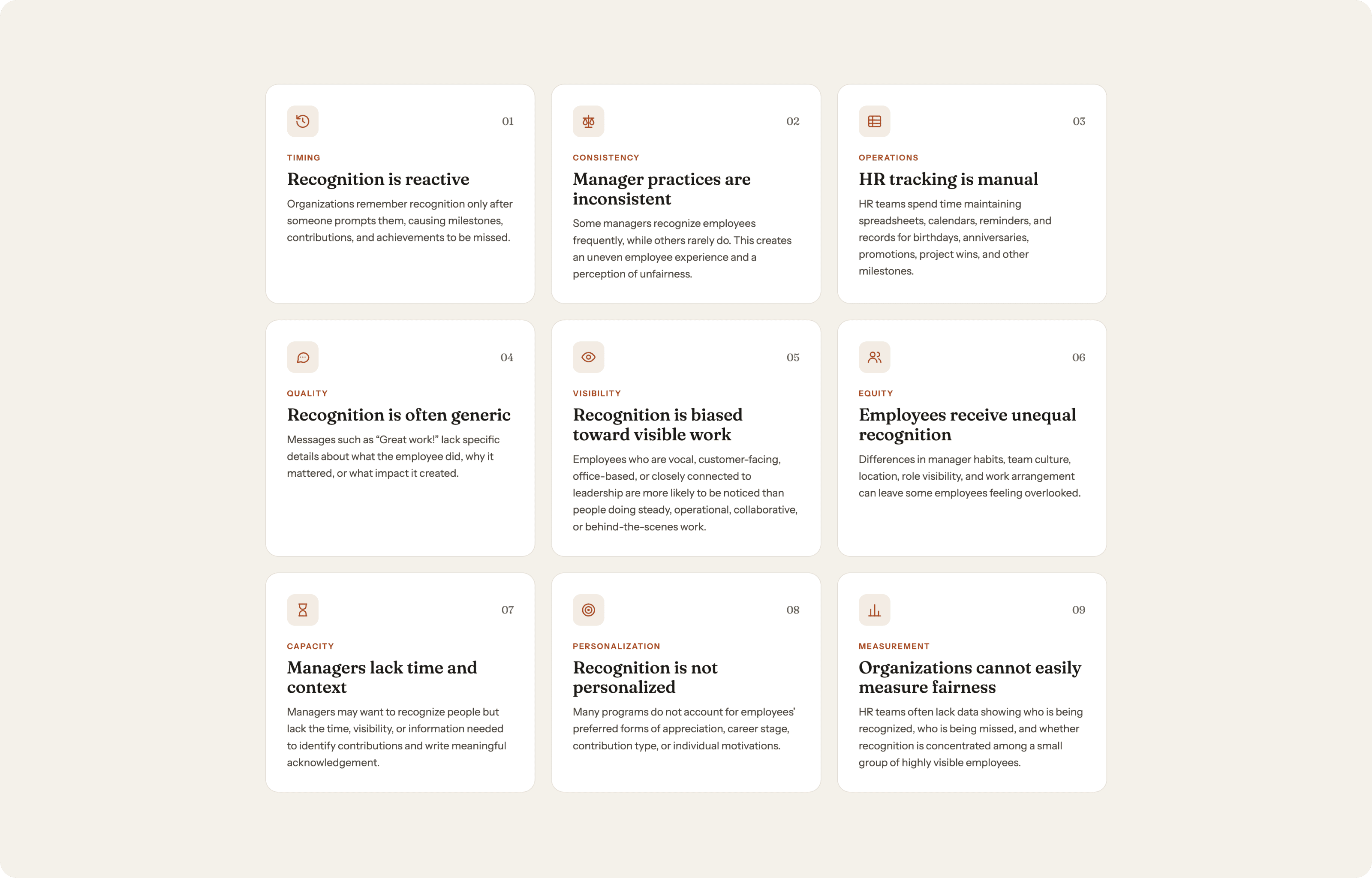
Most companies still approach culture as an afterthought. Recognition is inconsistent, manual, and often biased toward only the loudest wins. Important employee moments, birthdays, work anniversaries, and life events are frequently missed. As a result, employees feel unseen, disengaged, and emotionally disconnected from the organization, leading to lower productivity and higher employee turnover.

The Users

  • HR Teams: Responsible for building and maintaining organizational culture at scale

  • Managers & Team Leads: Need to recognize their team members consistently, but often lack time or reminders

  • Executives & Leadership: Want visibility into culture-building behaviours and engagement trends

  • Employees: Seeking recognition for their contributions and connection to organizational values

User Research & Insights

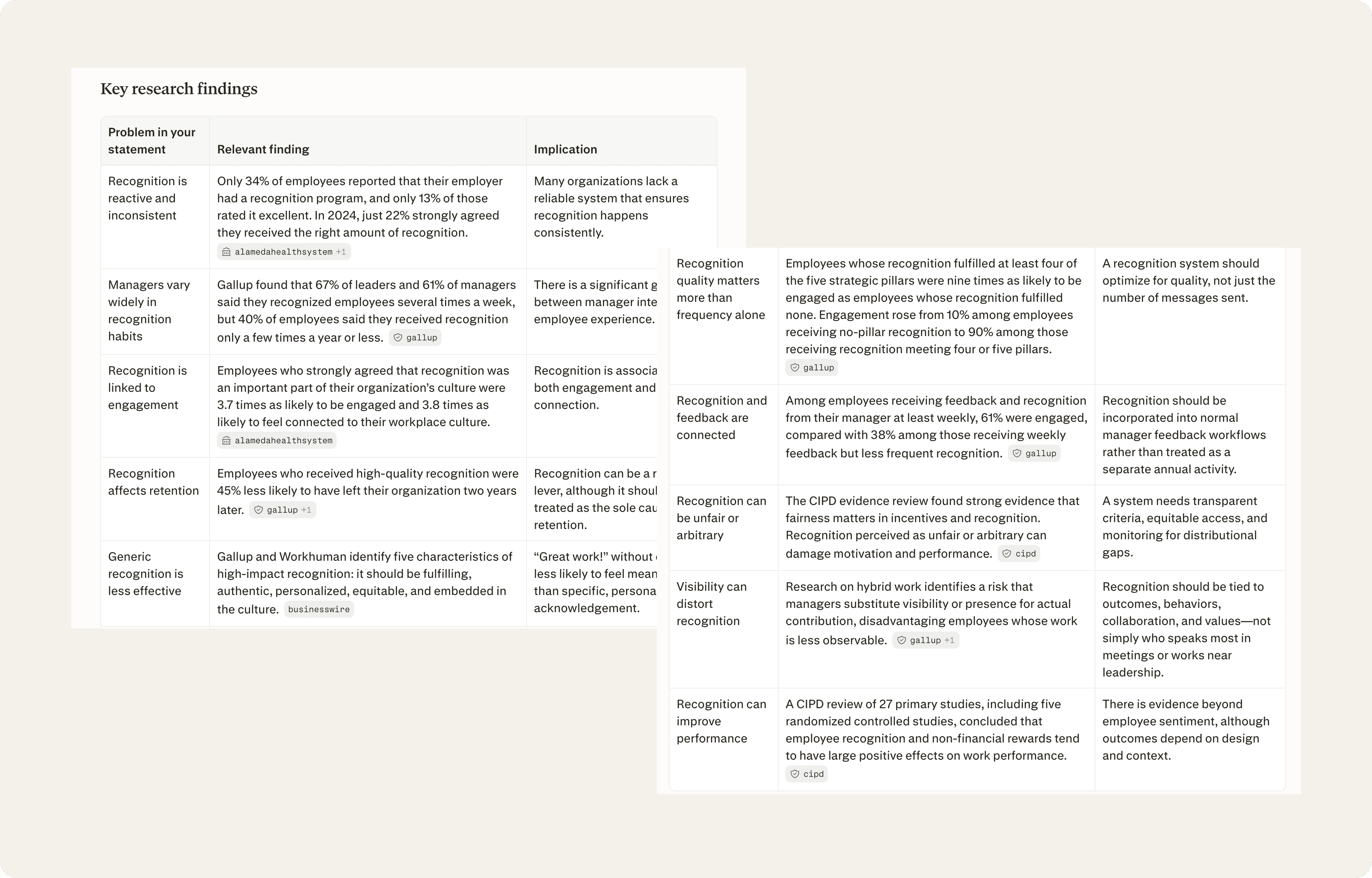
Organizations struggle with reactive, inconsistent employee recognition. HR teams waste time on manual tracking while important milestones get missed. Managers vary wildly in their recognition efforts; some excel, others forget entirely, creating perceived unfairness. When recognition does happen, it's often generic ("Great work!") or biased toward visible achievements, leaving steady performers feeling invisible. The result: employees feel undervalued and disconnected, directly impacting engagement. The core issues are a lack of proactive systems, time constraints, and the inability to deliver personalized, meaningful acknowledgement at scale.

Users Needs

  • Missed Moments: Important dates and milestones fall through the cracks in busy schedules

  • Recognition Fatigue: Managers want to recognize people, but lack time to craft thoughtful messages

  • Inconsistency: Some teams get recognized frequently, while others feel invisible

  • Generic Praise: One-size-fits-all recognition feels hollow and doesn't create emotional impact

  • No Visibility: Leaders have no data on recognition patterns or culture health

  • Manual Burden: HR spends hours tracking birthdays, anniversaries, and coordinating gifts

  • Bias Toward Loud Wins: Only highly visible achievements get recognized, missing quiet contributions

Trueperk

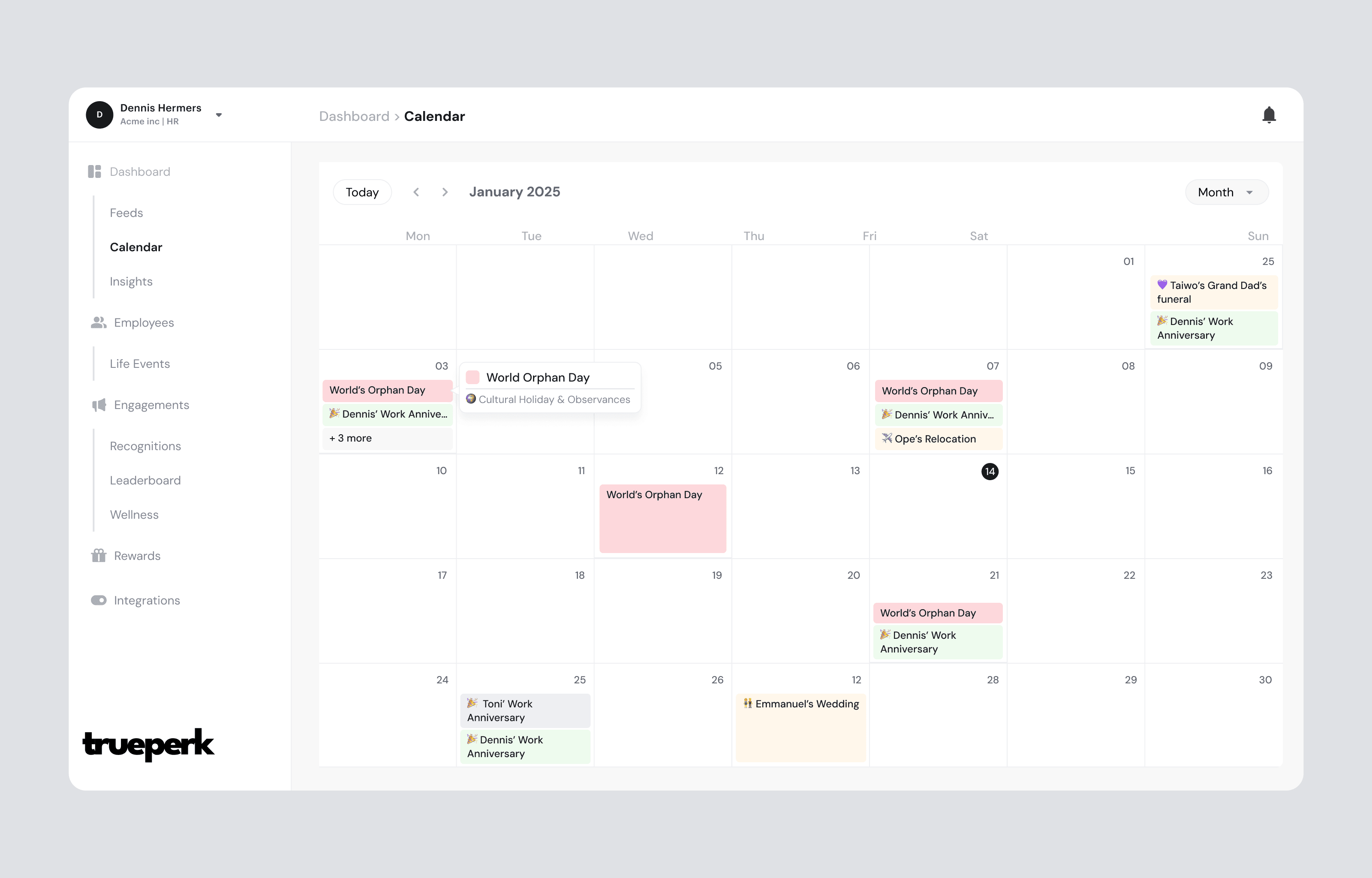
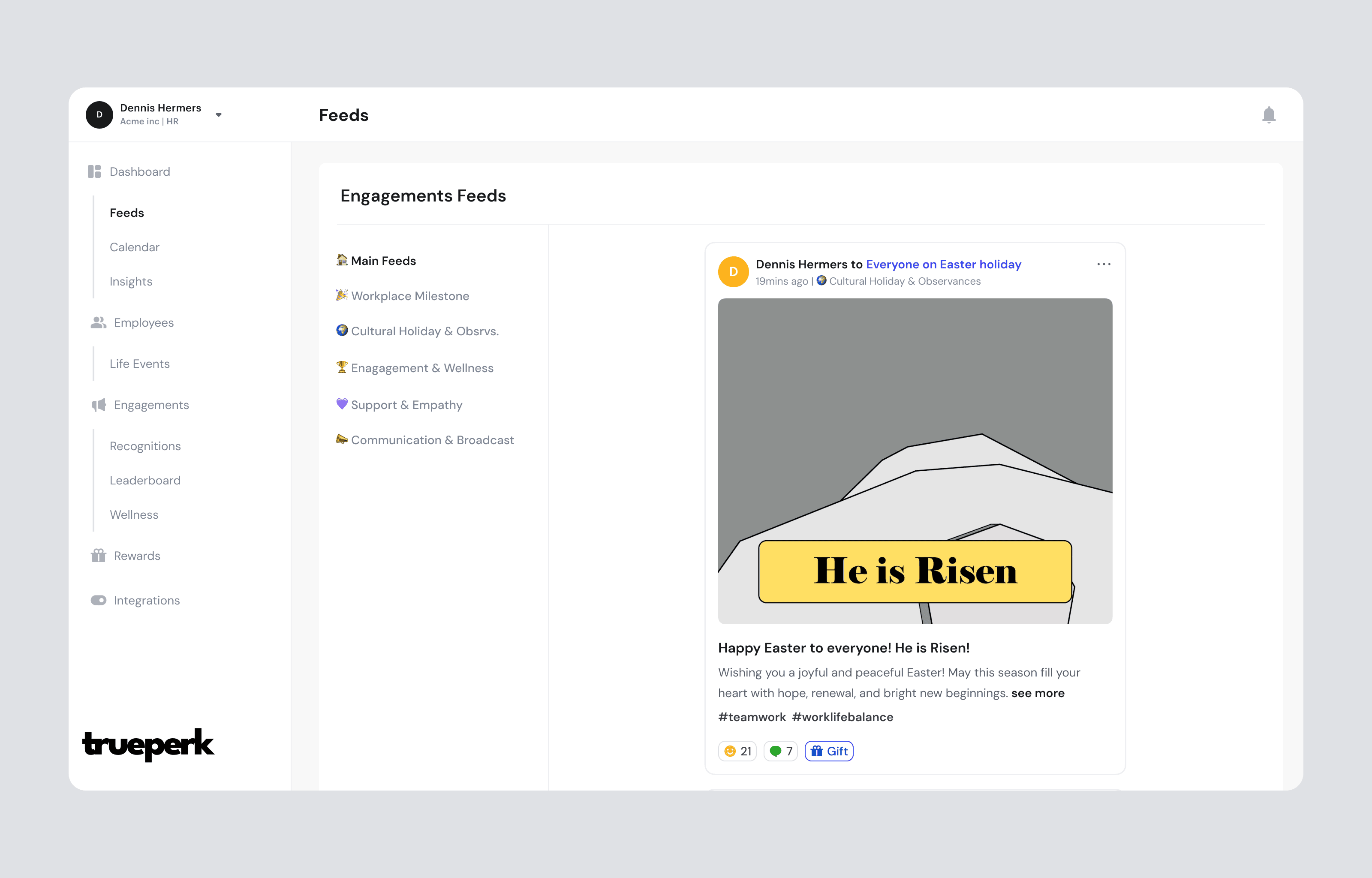
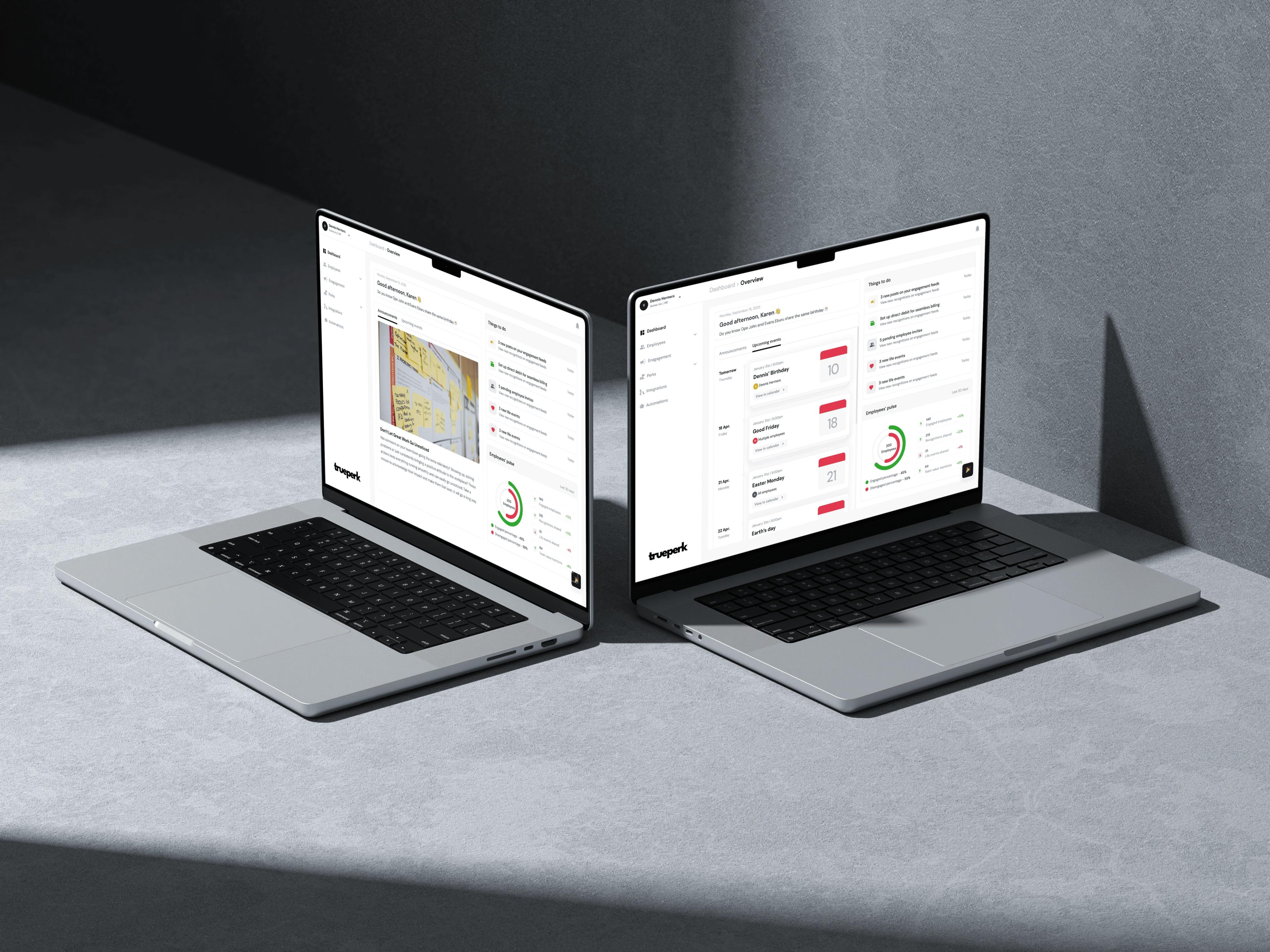
Build a culture of recognition. Reminders, global and local observances, and employee milestones, all in one calendar.

Trueperk concept

Feature 01

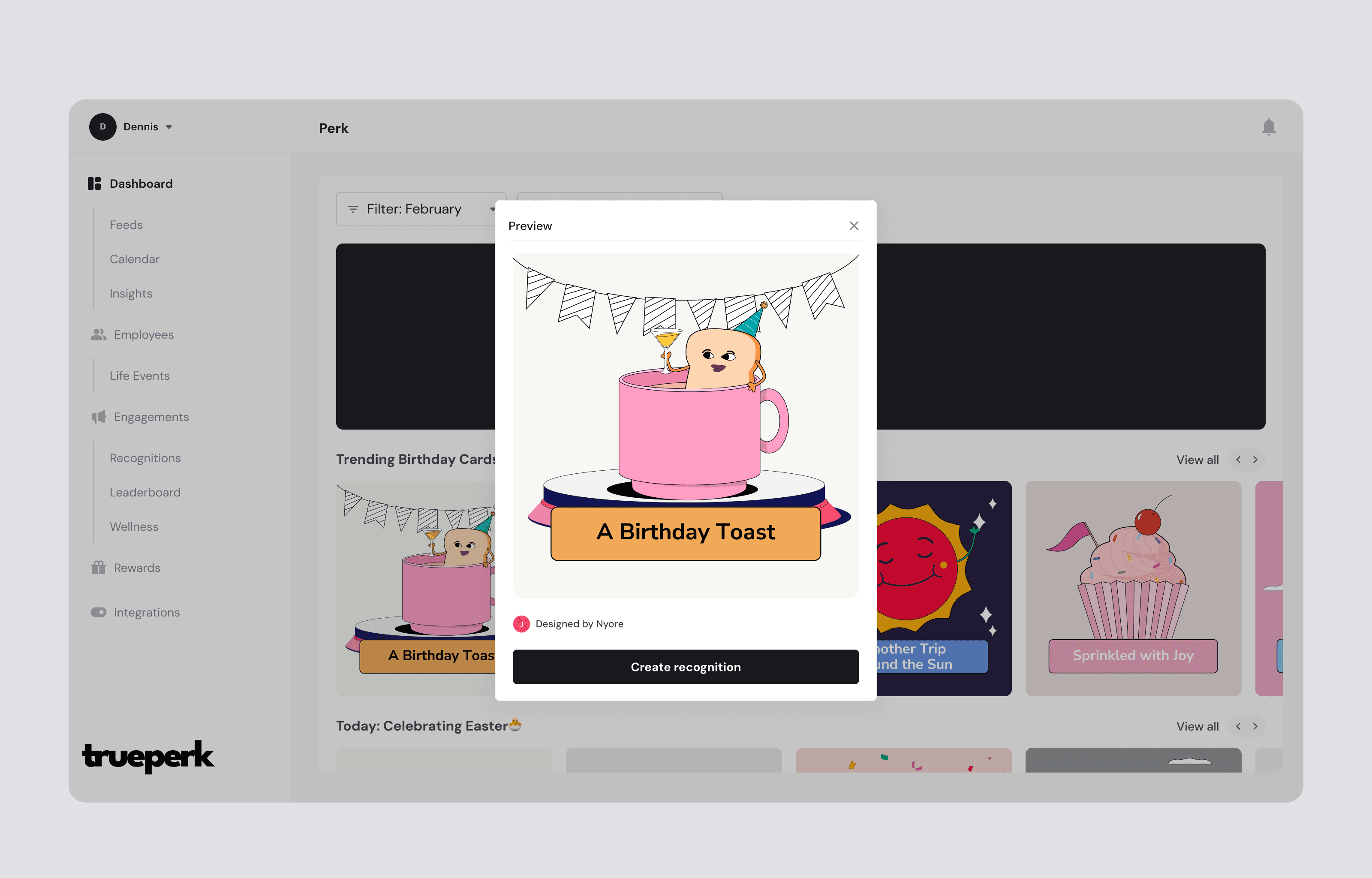
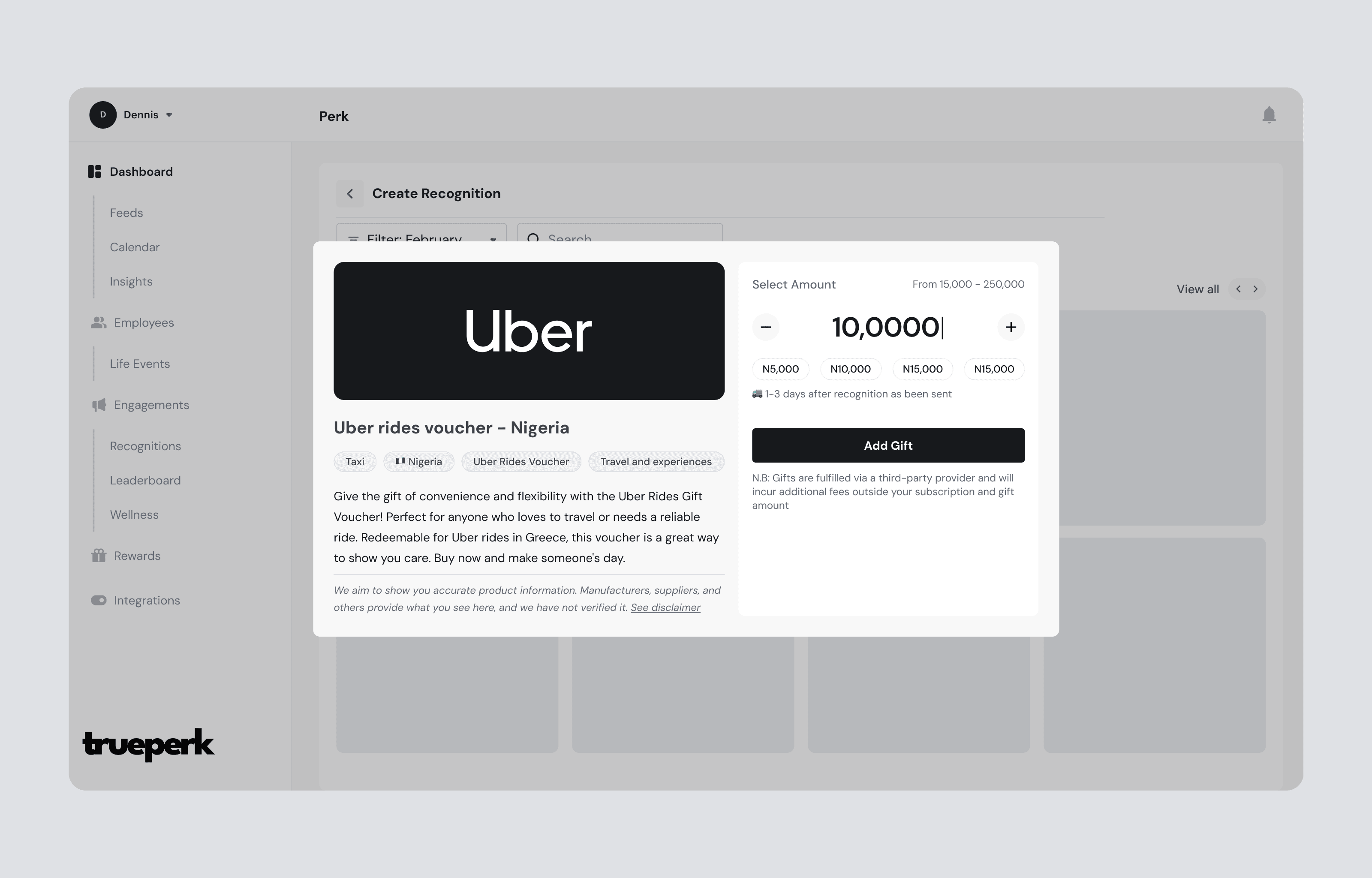
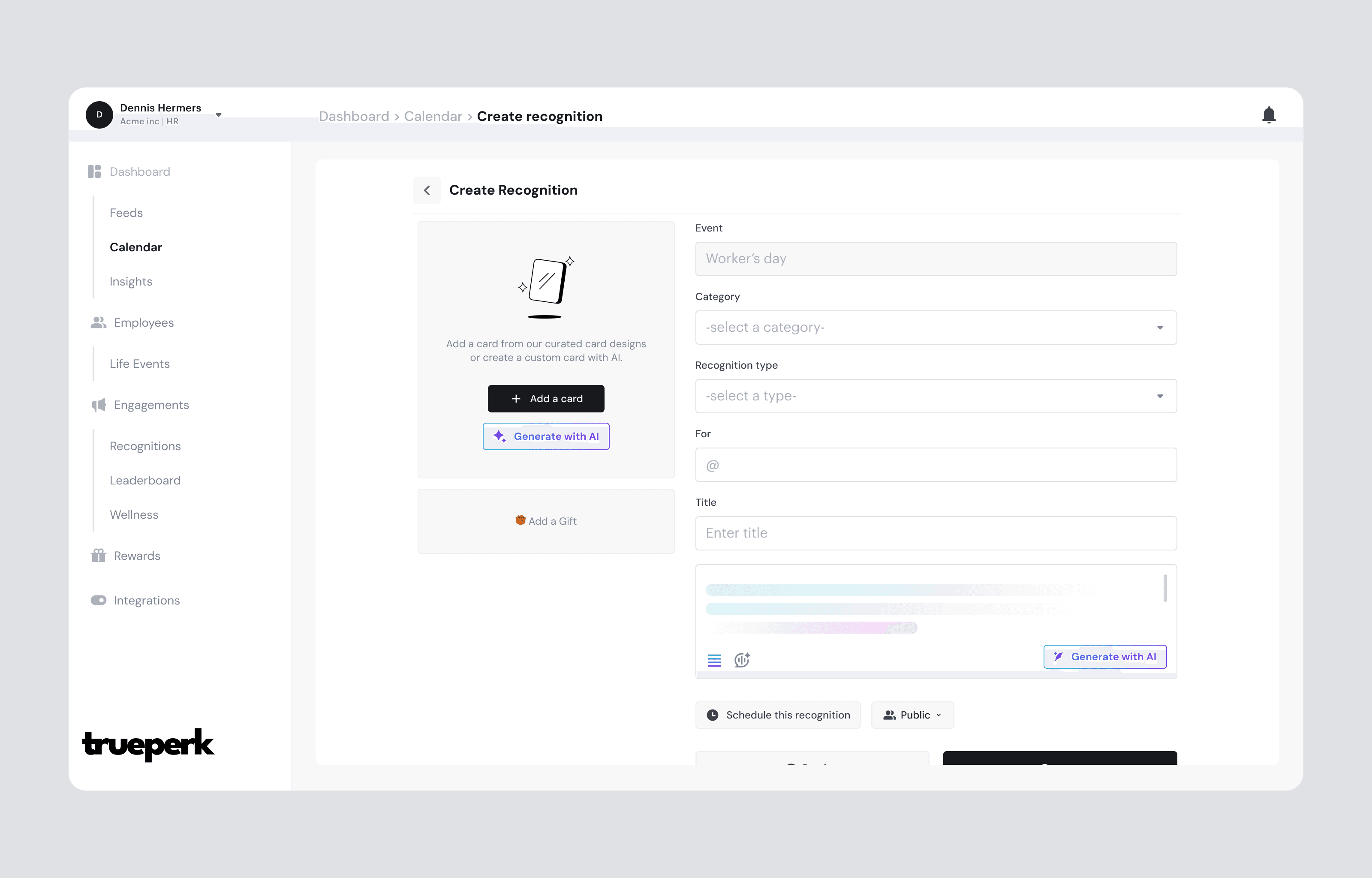
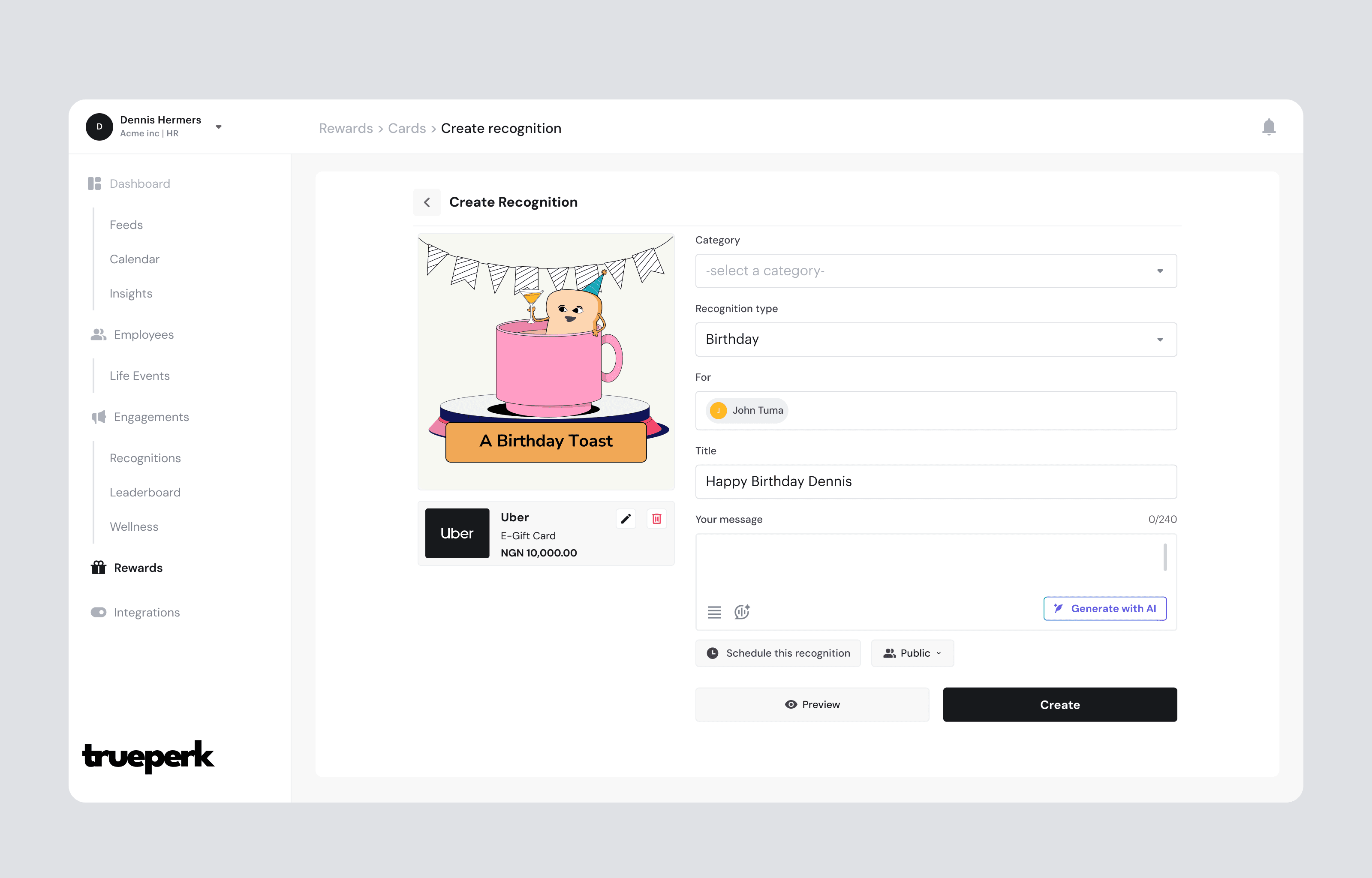
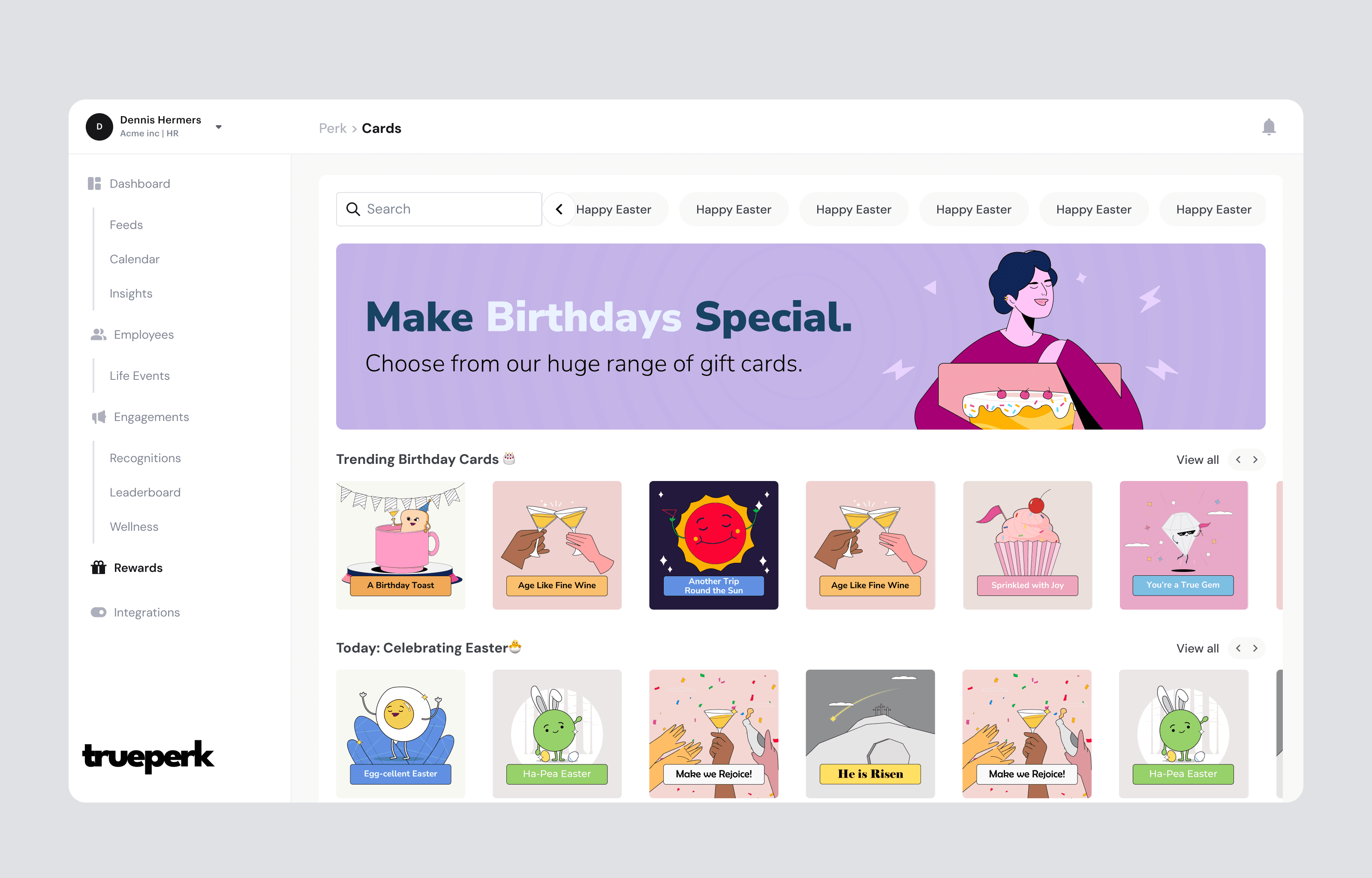
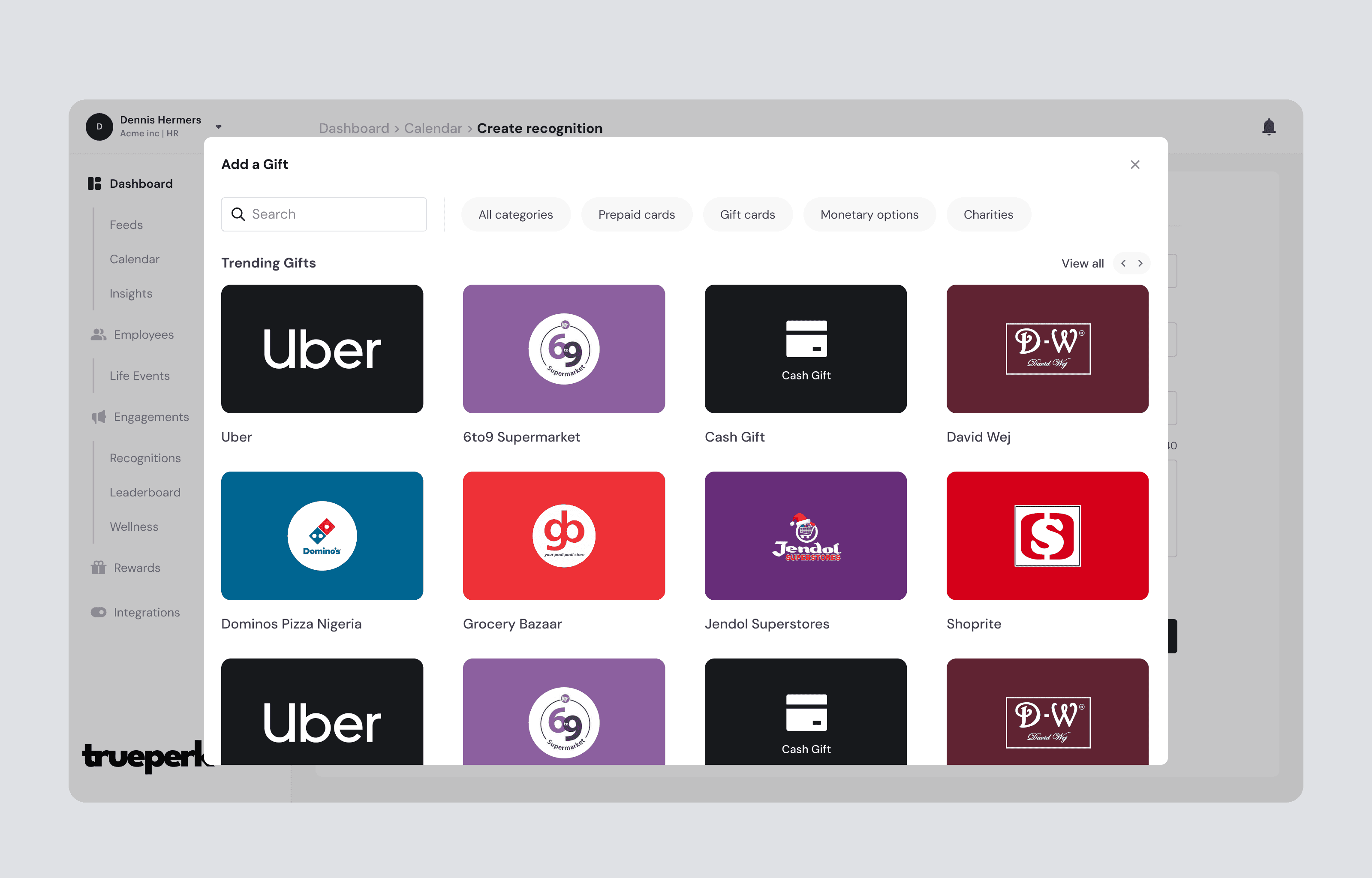
Localized gifting & custom recognition cards

What it does: Enables organizations to boost employee morale with thoughtful, timely perks, including localized gifts appropriate to the employee's location and culture, along with custom-designed recognition cards that reflect company branding and values.

Why it matters: Recognition becomes more meaningful when it includes tangible gestures beyond words. Localised gifting ensures relevance—what resonates in Lagos differs from what works in London. Custom cards maintain brand consistency while creating memorable moments that employees can save and revisit. The combination of personalized messages with thoughtful gifts creates deeper emotional connections than words alone, making employees feel truly valued rather than just checked off a list.
Feature 02

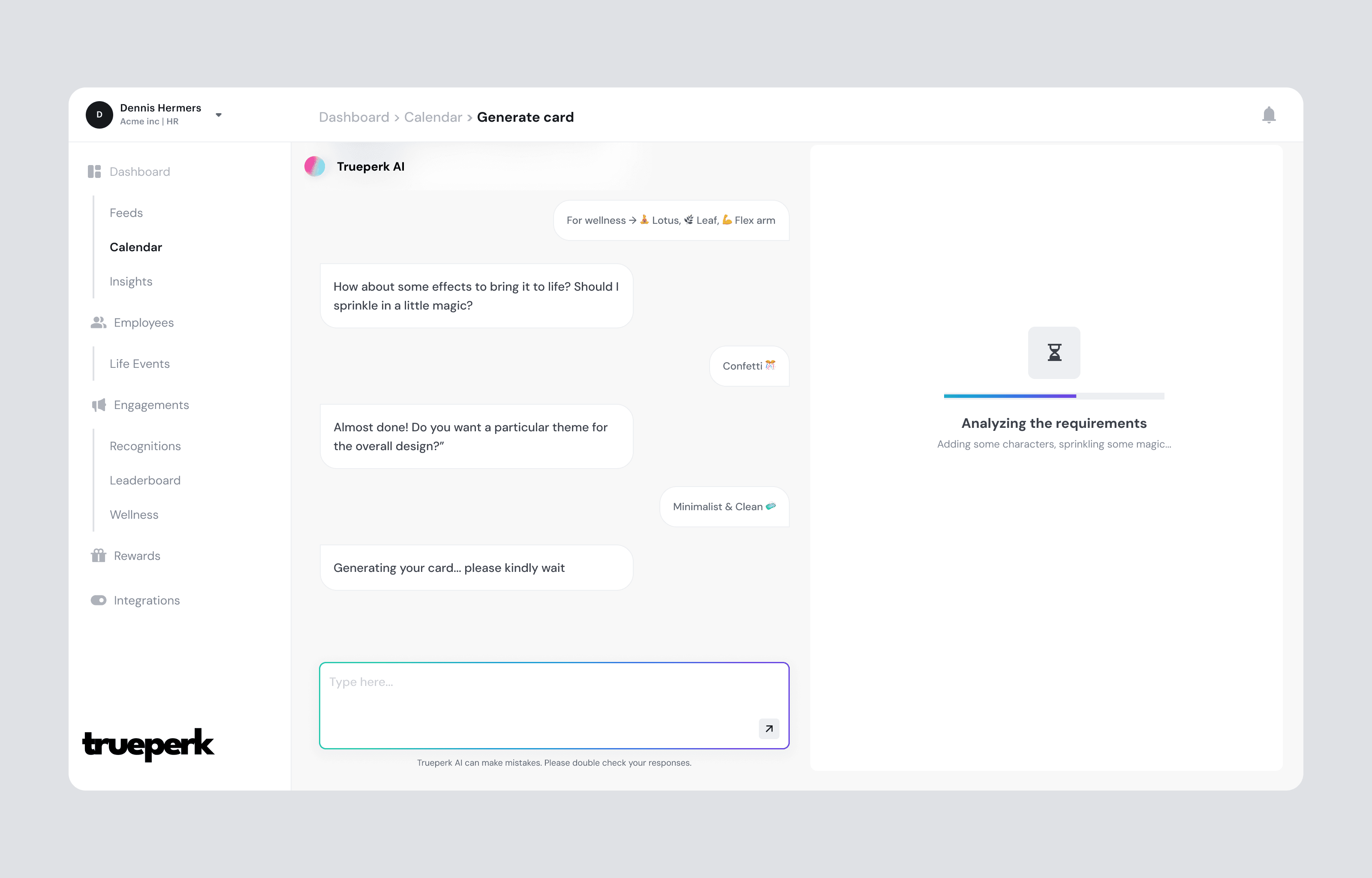
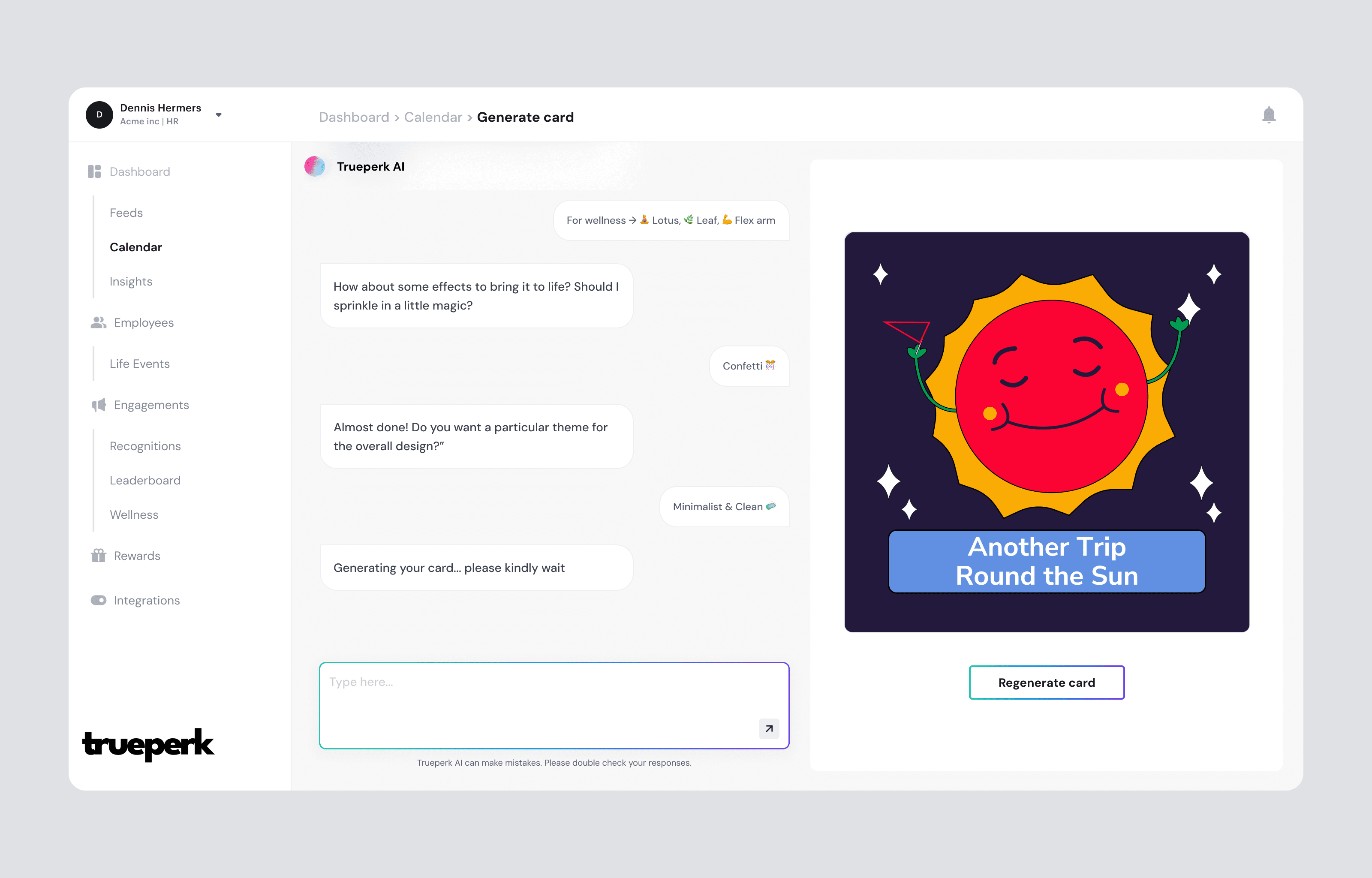
AI-generated cards & messages

What it does: Uses Generative AI to create personalized recognition messages, cards, and insights effortlessly. The AI considers the context (milestone type, employee role, achievements, company values) to generate thoughtful, specific recognition that managers can edit and send.

Why it matters: Recognition fatigue is real—managers want to appreciate their team but struggle with time and writer's block. Generic "Great job!" messages feel hollow and don't create emotional impact. AI-generated content removes the friction of crafting thoughtful messages while ensuring each recognition feels personal and specific. The editable AI drafts augment human judgment rather than replace it, increasing manager participation dramatically without adding workload. This transforms recognition from a burdensome task into an effortless habit

Feature 03

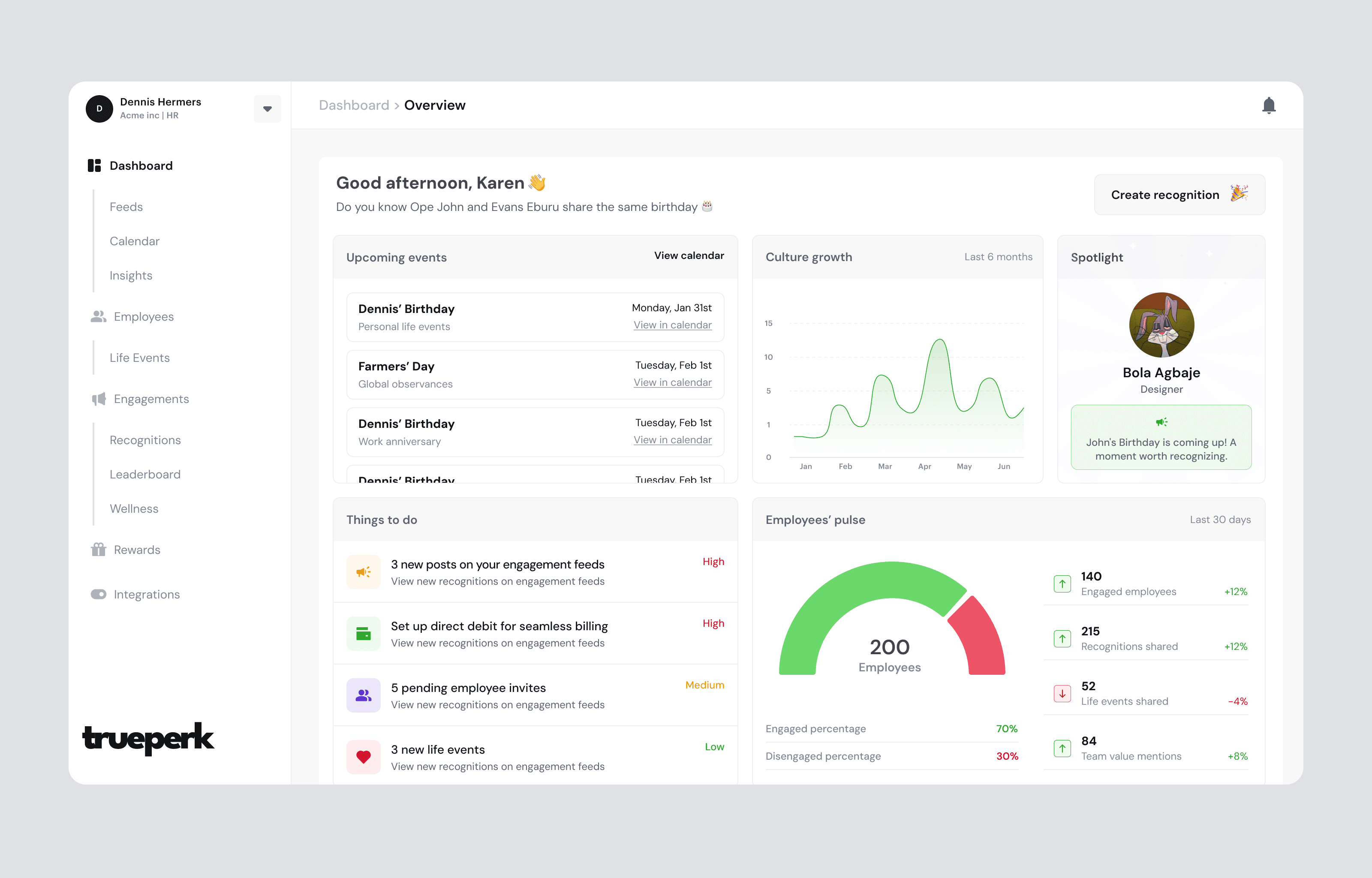
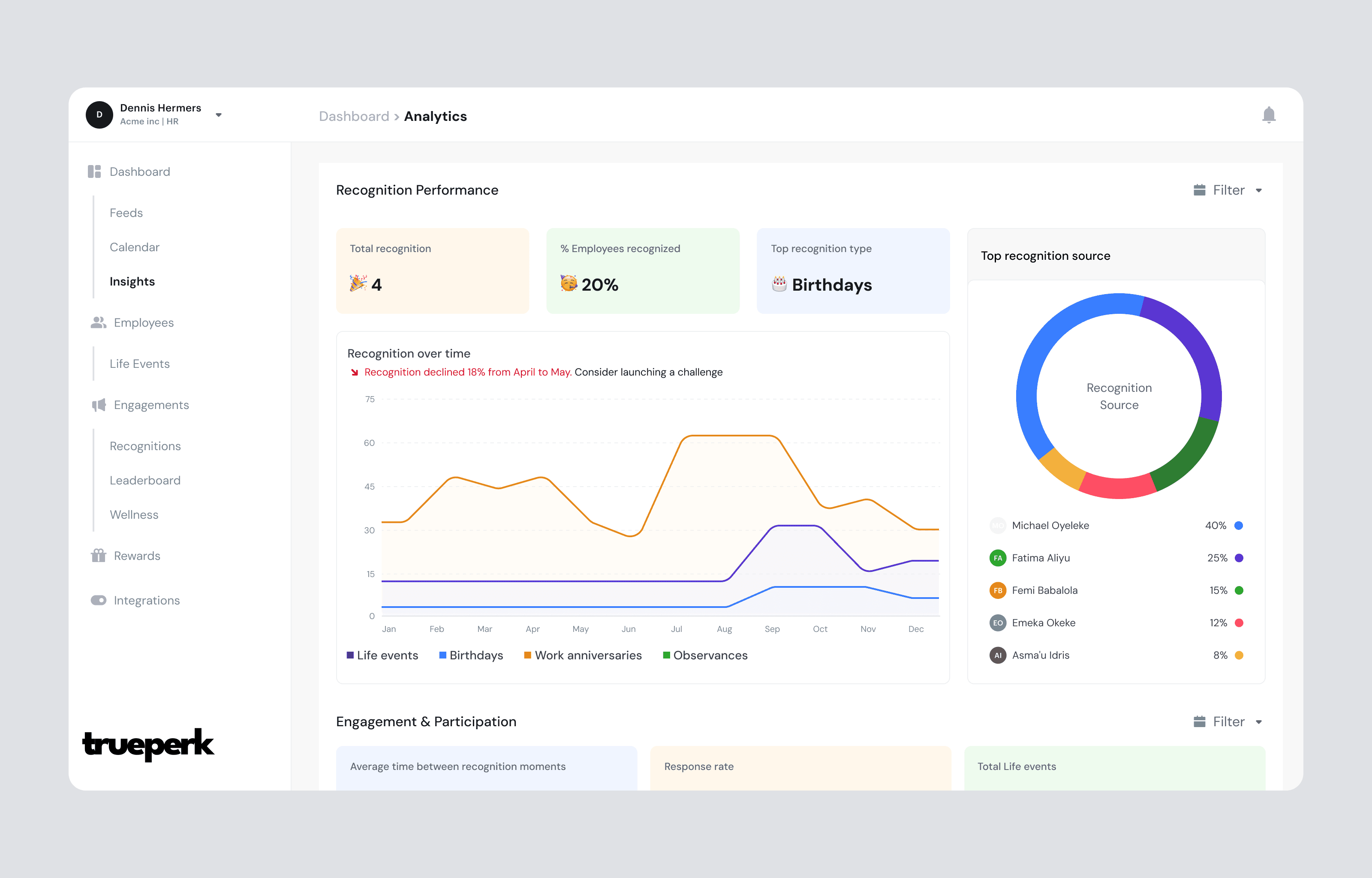
Organization-wide recognition analytics

What it does: Tracks employee engagement, performance, recognition frequency, and milestone celebrations across the organization. Provides HR teams and leadership with dashboards showing participation gaps, recognition trends, unrecognized teams, and culture health indicators.

Why it matters: Culture remains abstract and unmeasurable in most organizations, making it impossible to manage strategically. Recognition analytics transform culture into a measurable, actionable asset. HR can identify which managers are building strong team cultures versus those who need support. Executives can map engagement trends to business outcomes. Participation gap visibility ensures no teams feel invisible. This data-driven approach makes culture-building accountable and allows organizations to intervene before disengagement becomes turnover.

05/Impact

The impact

Employees: Felt Seen HR

Employees reported feeling more seen and valued within the organization

HR: Automation With Insight

HR teams praised the combination of automation with cultural insights

Leaders: Culture, Backed by Data

Leaders valued the data-driven approach to culture-building

06/Key Learnings

Key learnings

  1. 01

    Recognition must be designed, not left to chance

    Culture isn't improved by adding more tools; it's improved by integrating recognition into existing workflows so it happens naturally. When recognition is automated and intelligently triggered, participation increases dramatically without adding workload to managers. The smart calendar proved that the barrier wasn't a lack of caring, but a lack of structure.

  2. 02

    Personalization drives emotional impact

    Companies claim to care about culture, but few actually track it. Building recognition analytics revealed how powerful data becomes when HR can see participation gaps, managers can identify unrecognized teams, and executives can map engagement trends. The insight: culture becomes a strategic asset only when measured. What gets measured gets managed.

  3. 03

    Culture must be measured to be managed

    Generic praise doesn't move people. The AI-generated messages demonstrated that employees respond more deeply when recognition feels personal, specific, and contextual. Localized gifting and personalized cards reinforced that emotionally relevant gestures strengthen culture better than one-size-fits-all programs. Specificity matters more than frequency.

  4. 04

    GenAI works best when augmenting humans

    The goal wasn't to replace managers' voices; it was to inspire, accelerate, and improve them. AI should provide drafts, not final judgments. Users want control. AI-driven suggestions work best when editable. This hybrid approach increased trust and adoption by preserving authenticity while removing friction.

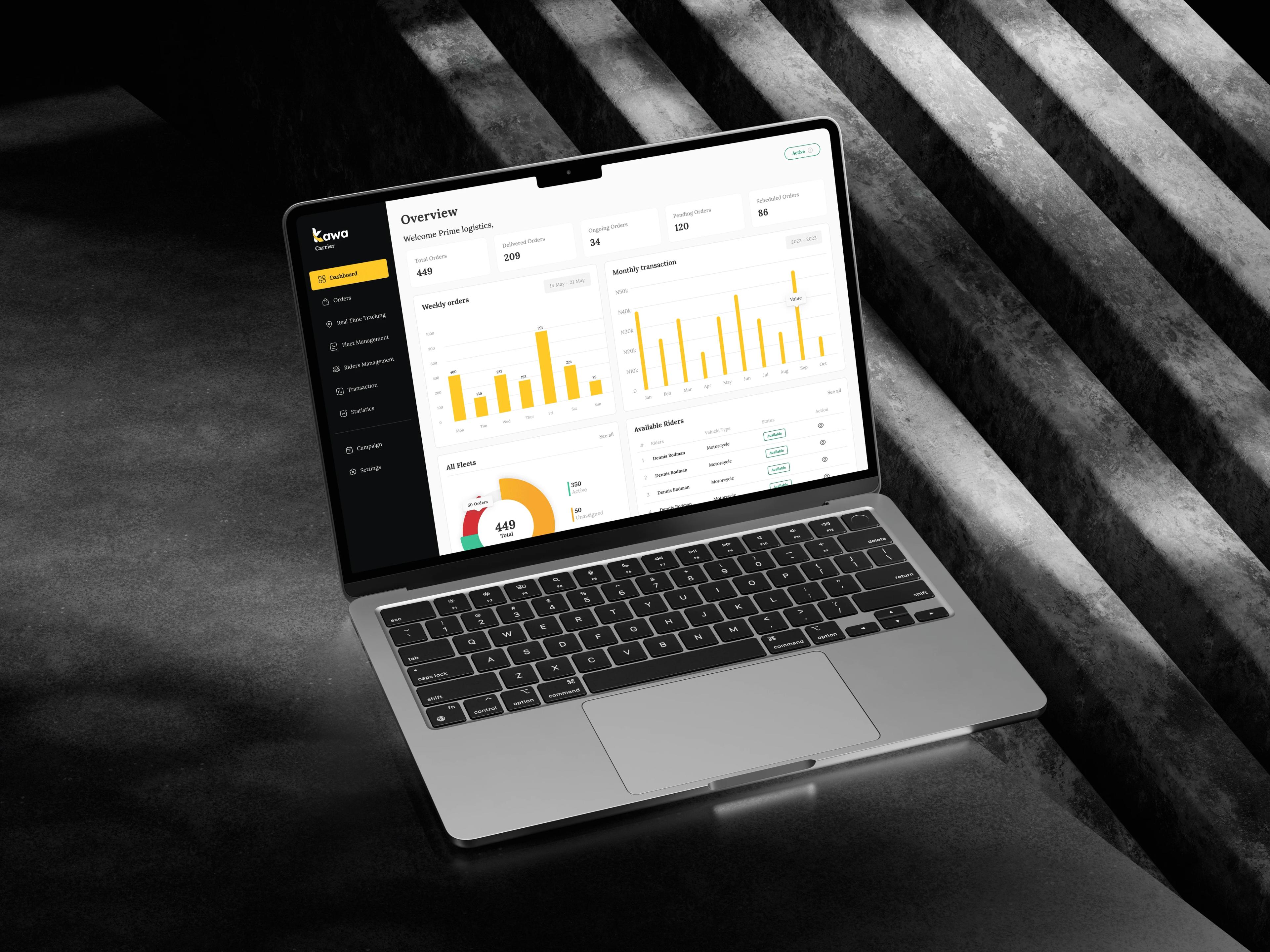
Kawa preview